Awon Omo Oba ikirun Ti Eka Ikorodu
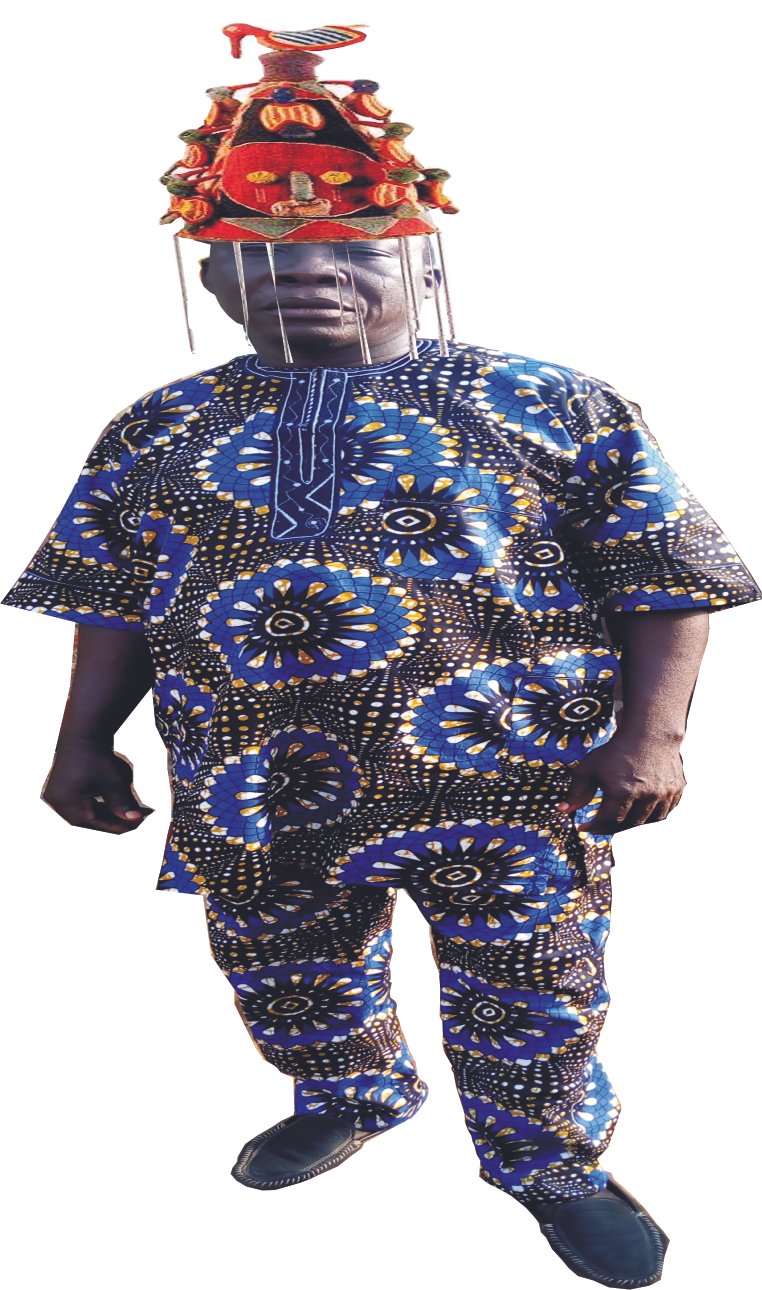
Ikirun is a town in Osun State, Nigeria. It is the headquarters of the Ifelodun Local Government Area. It is an historical city that derived its name from the first ruler of the town called Akinorun.
Basetan was the first settler and founder of present-day Ikirun. He was a hunter. and in one of his hunting expeditions, he came across another settlement nearby in Igbo Irele headed by Akinorun. Basetan convinced Akinorun to join him in present-day Ikirun. However, because Basetan was a hunter who used to go on long hunting sprees, he left the day-to-day administration of the settlement in the care of his new friend, Akinorun with the understanding that he would, whenever he was around stand in as the deputy. With this arrangement the rulership was progressively ceded to Akinorun and his descendants with Basetan as the Eesa (deputy), up to the present time, comes from the Basetan lineage. In recognition of this arrangement, whenever a new Akinrun is installed he mandatorily spends sometime in the Eesa's palace as the Eesa's guest (his original landlord) before moving into his palace.
This is also captured in the oriki of the Basetan descendants as “omo arile gba ofe kunrin, which literarily means “he who has enough space in his compound to accommodate male guests". There is a commemorative pillar in oja Oba in Ikirun with the inscription “Basetan, ode to te ilu Ikirun do," which literarily means “Basetan, the hunter who founded Ikirun".
Ikirun is situated in the north-eastern part of Osun State of Nigeria in Osun, northeast division. It is located within latitude 7 degrees 50 feet north of Equator and longitude 4 degrees 40 feet east of the Greenwich meridian. The town is located in a valley surrounded by two hills. Obagun/Gbogi, the hill to the north and Aafo the hill to the south. The mountains Alaroka and Idi-olo are to the east. Ikirun is centrally located in the Osun north-east division of Osun State. It is bounded on the north by the town Inisa in the Odo-otin local government area and to the south of Osogbo, the Osun state capital. To the east by the town Iragbiji in the Boripe local government council area, and on the west by the town Eko-Ende, also in the Ifelodun local government council area.
It is estimated that the population of Ikirun was about 60,826 (according to National Population Census, Ikirun).
Akinorun had two sons, Akinbiyi and Akinyemi who ruled and died at the original site, Igbo Irele. The other Akinoruns children Oba-Ara, Gboleru and Adedeji moved out of the original site at Igbo Irele because there was a shortage of water. Oba-Ara became the first ruler of the present Ikirun while Basetan became Eesa and head of the traditional chiefs and kingmakers in the town.
In recognition of the original role of Basetan as Oba-Aras host, every Oba soon after his appointment was obliged to spend a period of time, previously three months but now only three days with Eesa. Just as Ikirun is derived from Akinorun so does the title of Oba Akinrun which takes its origin from the same name.
The former settlement at Igbo-Irele was short lived. Since the establishment of the town, fifteen Akinrun have reigned over Ikirun.
Women who also hold traditional titles in Ikirun.
The Irele festival comes up in July every year to coincide with harvest of new yams. In Ikirun, new yams must not be brought to the Obas market for sale until after Irele yam festival is held.
Irele festival is celebrated to commemorate the companion of founder of Ikirun. History has it that Akinorun came with a companion, named Irele. Like Akinorun, he was a powerful hunter and warrior. They both first settled in what is known as Igbo Irele. Not quite long after their arrival at Igbo Irele, Akinorun took ill. He called his companion and his people, and handed the leadership over to Irele. Thereafter he died.
The administration of the town and welfare of all that was left by Akinorun were in the hands of Akinoruns' children and Irele. He took up the challenge and whenever war threatened Igbo Irele, he quickly rose and fought gallantly.
Irele announced his imminent death and gave certain instruction that must be adhere to by the people. He gave them two calabashes with instructions to never to open them. He then dipped Osanyin's staff into the ground with instructions that whenever an attack was imminent, the people should go there and call his name upon which he would fight for them. He added that when he died his black dog must be sacrificed. With these instructions, Irele, according to legend, entered into the ground. Akinoruns' eldest son, Akinbiyi continued the administration.
It was in appreciation of what Irele did for Ikirun when he was alive that the people deified him and made a covenant that they would worship him and offer him sacrifices every year during the month of July to coincide with the harvest of the yams.
In Yoruba land, there is a festival called Egungun Festival. In Ikirun, Chief Ojomu is the traditional Chief in charge of Egungun Ilu (Town masquerade) while Chief Olota is the leader of all Egungun Oje (Magical masquerade) of the town.
The Egungun Festival comes in May annually and lasts for seven consecutives days. It is Chief Olota and Chief Ojomu who fix the days of the Celebration of the Egungun Festival in Ikirun. On the appointed day, Akinorun and his traditional Chiefs move to celebrate in the residence of Chiefs Ojomu and Olota, and will later proceed to Igbo Igbale for further ceremonies. On the third day known as Ojo Ita all Egunguns in Ikirun would come out. There are two types of Egungun in Ikirun. The first group are the Egungun Ilu otherwise known as Eegun Olore. They whip one another to entertain people. These include Doodika (Sika), Orogun meji, Labinkolo, Yemoja, and Yerepe. The second category is the Egungun Oje. They are masquerades who perform magical acts (Idan) to entertain people. These include Owolewa, Eyeba, Alagbaa and Eyefo-odo.
On the seventh day (Ijo Ije), Chief Ojomu and Olota feast with the Egunguns, celebrants and other traditional chiefs. They prepare meals such as pounded yam and egusi soup. All Egunguns come out and pay homage to Akinrun and his Chiefs at the palace. The Egunguns will entertain the Oba and the chiefs and thereafter offer prayer for Akinrun. As part of the ceremony, the masquerades proceed to the central market, near the Akinruns palace where they entertain the townsfolks by blessing the artisans, traders and market men and women. The people in turn give presents like kolanut and money to all the masquerades.
The idea behind Ikirun Day Celebration was the outcome or aftermath of a meeting of all Clubs in Ikirun which took place in December, 1991. The main objectives or purpose of Ikirun Day Celebration are as follows: First, to give the indigenous people of Ikirun an opportunity to get acquainted with the progress that their town has made so far, its problems and aspirations, and to make an assessment of the areas which various clubs and associations could be of help, financially and morally to the historic town.
Secondly, Ikirun Day Celebration is an occasion of reunion. The day is celebrated so as to generate rapport among the Ikirun indigenous by bringing them together in a carnival-like atmosphere, at least once a year.
Thirdly, to bring home the Ikirun indigenous people who sojourn in far away places without coming home for many years.
Fourthly, the day is also set aside to generate and raise funds for the developmental projects like the building of a modern palace for Akinrun.
Lastly, to invite visitors, investors, outsiders and friends to Ikirun in order to know the indigenous people and to appreciate the beauty and culture of the township.
The first Ikirun Day was on 18 April 1992 at the Akinorun Grammar School, Ikirun. The day was preceded by prayers in the mosques and churches, symposium and paying of homage to Kabiyesi by the people of Ikirun at home and abroad.